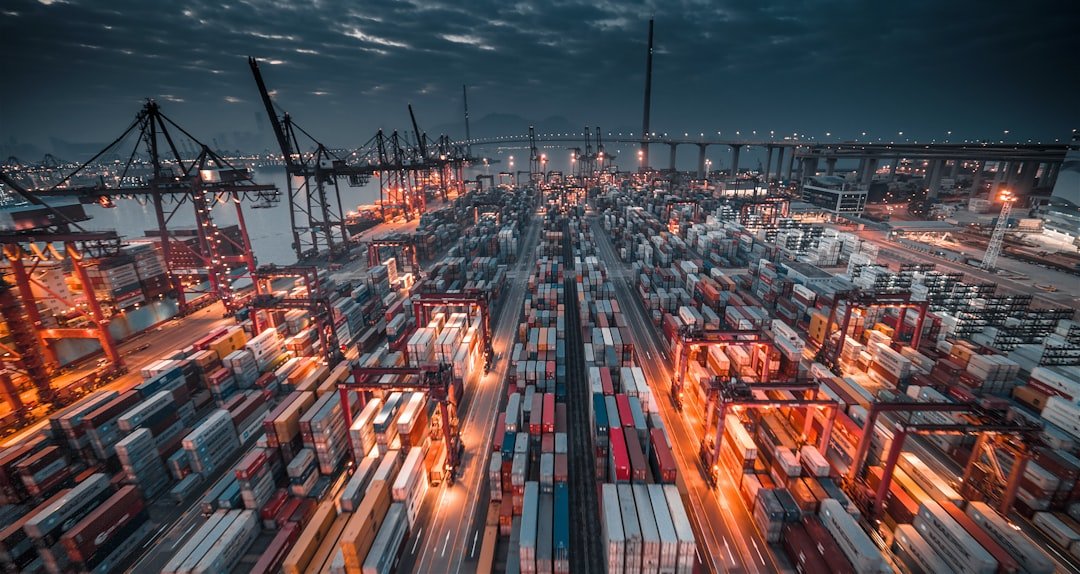
The Warehouse Floor Doesn’t Look Like It Used To
Three years ago, a warehouse robot could follow a line on the floor and not much else. Today, some of them can watch a worker pick a box off a shelf once and then do it themselves an hour later. That shift, from rigid automation to machines that learn from watching, is the real story behind physical AI logistics supply chain deployments right now.
The core takeaway: embodied AI is moving warehouse robots from fixed, pre-programmed tasks to adaptable, learned behavior, and that change is what’s letting companies automate the messy, irregular jobs that older automation always skipped.
What Is Embodied AI in a Warehouse Context
Embodied AI means putting a trained model into a physical body, a robot arm, a mobile picker, an autonomous forklift, so it can sense its surroundings and act on them in real time. It’s different from the software AI most people know, like a chatbot, because it has to deal with gravity, lighting changes, and boxes that aren’t stacked the way the manual said they would be.
The technical engine behind this shift is the vision-language-action model, or VLA model. Instead of hand-coding a robot arm to grab a box at exact coordinates, a VLA model lets the robot interpret a camera feed, understand a instruction like “pick up the dented carton,” and generate the motion needed to do it. Companies like Covariant, Figure AI, and Google DeepMind (through its RT-2 and RT-X research) have all published results showing warehouse robots generalizing to objects they’d never seen in training. That generalization gap used to be the entire bottleneck.
Why This Matters More Than Past Automation Waves
Conveyor belts and barcode scanners automated the predictable 80% of warehouse work decades ago. The remaining 20%, irregular SKUs, damaged packaging, mixed pallets, stayed human because it required judgment. Embodied AI is the first technology aimed squarely at that leftover 20%, which is exactly why it’s getting so much capital right now.
How Warehouse Robots Are Actually Being Deployed Today
Right now, warehouse robots powered by embodied AI are handling piece-picking, pallet building, and trailer loading in live facilities, not just pilot labs. Amazon, Walmart, and third-party logistics providers like GXO Logistics have all confirmed active deployments as of 2024, with Amazon reporting over 750,000 robots in its network as of its 2023 shareholder letter.
The distinction that matters is between older fixed automation and this newer generation. A traditional palletizing robot needs the box dimensions programmed in advance, down to the millimeter. A VLA-driven system can look at a pallet of mixed, unlabeled boxes and figure out a stable stacking order on the fly. That’s a meaningfully different capability, not just a faster version of the same one.
Named Examples Worth Tracking
Figure AI’s Figure 02 humanoid has been tested inside a BMW manufacturing facility in Spartanburg, South Carolina, doing sheet metal part insertion, work that’s adjacent to logistics handling. Covariant’s AI Robotics Foundation Model was trained on data from over 30 billion decisions inside warehouses running its picking systems. Agility Robotics’ Digit humanoid has been piloted with GXO Logistics for trailer unloading, a task previously considered too physically awkward to automate.
Where the Supply Chain Impact Actually Shows Up
The clearest supply chain effect isn’t fewer workers, it’s fewer bottlenecks at the two most brittle points: receiving and last-mile sortation. Physical AI logistics supply chain systems are getting deployed first at these choke points because that’s where labor shortages and error rates cost the most money per hour of delay.
Receiving docks are chaotic by nature. Trucks arrive with mixed freight, inconsistent labeling, and tight unloading windows. A human-supervised robot that can unload a trailer without a pre-mapped layout removes a scheduling constraint that used to force warehouses to staff up for worst-case volume. That has a direct effect on peak-season hiring, which retailers have struggled to fill reliably since 2021.
The Overlooked Second-Order Effect
Here’s the part most coverage misses: embodied AI doesn’t just replace tasks, it changes what data a warehouse management system needs to collect. Older WMS platforms tracked SKU location and quantity. A warehouse running VLA-based robots needs continuous visual and sensor data streams to keep retraining its models. That’s pushing warehouse operators to treat their facilities more like data-generating environments than static storage space, a shift closer to how autonomous vehicle fleets treat road data. Expect warehouse leasing contracts and tech stack requirements to start reflecting that within the next two to three years.
What’s Actually Slowing Adoption Down
Cost and reliability, not capability, are the real constraints on wider rollout. A single Figure 02 or Digit unit runs into six figures once integration and maintenance are included, and most warehouse operators still need a human safety supervisor nearby during early deployment phases, which erodes the labor savings pitch.
Battery life is another practical limit. Most humanoid platforms in current pilots run two to five hours before needing a charge cycle, which means facilities need battery-swap infrastructure or shift scheduling built around downtime. That’s a solvable engineering problem, but it’s not solved yet, and it’s the reason full lights-out humanoid warehouses are still years away, not months.
For more on the vision-language-action models underpinning these robots, see TopRatingA2Z’s deep dive on embodied AI controlling physical robots.
Who Should Actually Care About This Now
Mid-size 3PL operators running facilities between 100,000 and 500,000 square feet are the segment best positioned to benefit first, because they have the volume to justify capital investment but not the scale to fully custom-build automation the way Amazon does. For them, renting robotics-as-a-service from vendors like Locus Robotics or Fetch Robotics is a more realistic entry point than owning humanoid units outright.
Frequently Asked Questions
What is physical AI in logistics and supply chain?
Physical AI refers to AI models embodied in robots that can sense and act in the real world, like picking, sorting, or loading goods. In logistics, it’s used to automate warehouse tasks that previously required human judgment, such as handling irregular or damaged packaging.
What are VLA models and why do they matter for warehouse robots?
VLA stands for vision-language-action, a model architecture that lets a robot interpret camera input and natural language instructions, then generate physical movements. It matters because it lets warehouse robots generalize to new objects and layouts without being reprogrammed for each one.
Are warehouse robots replacing human workers right now?
Not entirely. Most current deployments, including Amazon’s and GXO Logistics’ pilots, use robots alongside human supervisors for safety and quality checks. The near-term effect is reducing reliance on temporary peak-season labor rather than eliminating existing warehouse jobs outright.
How much does an embodied AI warehouse robot cost?
Humanoid platforms like Figure AI’s Figure 02 or Agility Robotics’ Digit cost well into six figures per unit once integration is included. That’s why many mid-size logistics operators are choosing robotics-as-a-service subscriptions instead of buying units outright.
Which companies are leading in embodied AI for logistics?
Figure AI, Agility Robotics, and Covariant are the most cited names in current pilots, alongside research contributions from Google DeepMind’s RT-2 and RT-X projects. Amazon, Walmart, and GXO Logistics are the major operators running live deployments as of 2024.
Embodied AI isn’t a future concept in warehousing anymore, it’s running live trailer unloads and pallet builds today, and the physical AI logistics supply chain shift is what’s finally automating the irregular work older robots couldn’t touch. The next few years will decide whether this scales past pilot programs or stalls on battery life and cost.
- Embodied AI moves warehouse robots beyond fixed, pre-programmed tasks into adaptable, learned behavior
- VLA models are the technical foundation letting robots generalize to unfamiliar objects and layouts
- Receiving docks and trailer unloading are the first real bottlenecks getting automated
- Cost and battery life, not capability, remain the biggest barriers to wider adoption
- Mid-size 3PL operators are best positioned to benefit through robotics-as-a-service rather than outright ownership