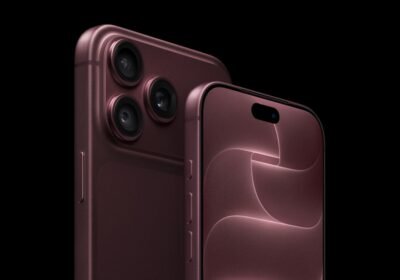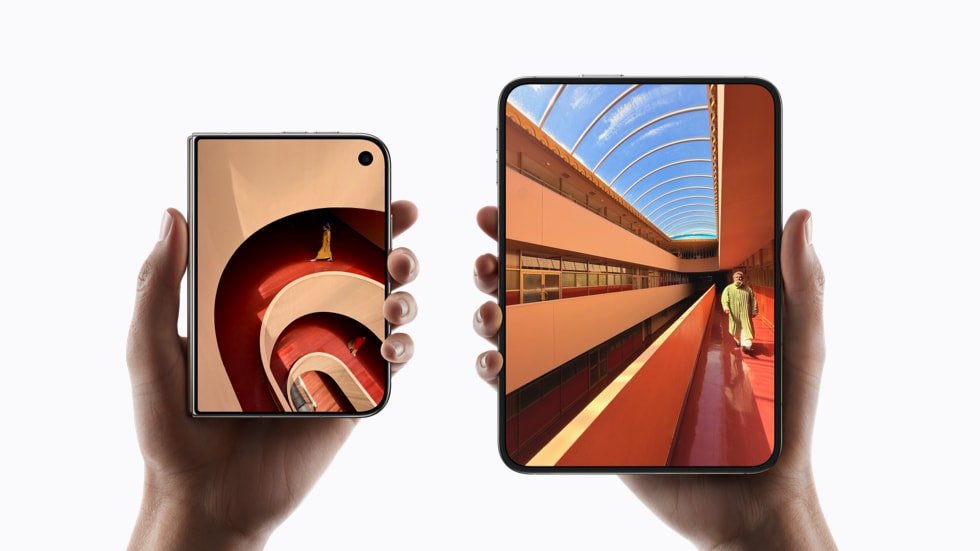
After nearly a decade of patents, supply-chain whispers and working names like “iPhone Fold” and “iPhone Ultra,” Apple has made it official. On September 9, 2026, at its “Surprise and Shine” keynote in Cupertino, the company unveiled the iPhone Duo, its first foldable smartphone. It is the headline act of Apple’s biggest launch of the year and the first major keynote since John Ternus succeeded Tim Cook as CEO on September 1.
The iPhone Duo pairs a 7.6-inch folding inner display with a 5.4-inch outer screen, runs on the new A20 Pro chip, and brings camera tricks no other iPhone can do. It also carries the highest starting price Apple has ever put on an iPhone. Here is everything you need to know before pre-orders open.
iPhone Duo at a Glance
| Specification | iPhone Duo |
|---|---|
| Inner display | 7.6-inch Super Retina XDR OLED, 1878 × 2670, 430 ppi, nano-texture |
| Outer display | 5.4-inch Super Retina XDR OLED, 1398 × 2034, 460 ppi |
| Refresh rate & brightness | ProMotion up to 120Hz; 1,000 nits typical, 3,000 nits peak outdoor |
| Chip | A20 Pro (6-core CPU, 7-core GPU, dual 16-core Neural Engine) |
| Rear cameras | 48MP Fusion Main (f/1.6) + 48MP Fusion Ultra Wide (f/2.2) |
| Front cameras | 12MP Center Stage (outer), under-display FaceTime camera (inner) |
| Biometrics | Touch ID in the side button |
| Battery life | Up to 24 hours typical use; up to 44 hours video playback |
| Build | Grade 5 titanium frame, Ceramic Shield 2 front, Ceramic Shield back |
| Water resistance | IP68 (up to 6 meters for 30 minutes) |
| Thickness & weight | 5.2 mm open, 11.3 mm closed, 254 g |
| Storage | 256GB, 512GB, 1TB, 2TB |
| Colors | Star White, Night Sky |
| Starting price | $1,999 (US) |
Design: Thinnest iPhone Ever, When Open
Apple took a book-style approach. Closed, the iPhone Duo behaves like a compact phone; open, it becomes a small tablet. Unfolded, it measures just 5.2 mm thick, making it the thinnest iPhone Apple has ever built. Folded, it is 11.3 mm, and it weighs 254 grams.
The frame is mirror-polished Grade 5 titanium, with 85 percent recycled titanium in the enclosure. The most intricate piece is the hinge cover, which is 3D-printed from recycled titanium and assembled from more than 100 components. Apple says the transition between open and closed has been engineered to feel fluid rather than mechanical, a point the company emphasized repeatedly on stage.
Durability was clearly a priority. The outer display sits beneath Ceramic Shield 2, which Apple rates at three times the scratch resistance of the previous generation, while the back uses standard Ceramic Shield. The whole device carries an IP68 rating, surviving submersion to 6 meters for up to 30 minutes. That is a meaningful jump over most foldables on the market.
Two colors are available at launch: Star White and Night Sky, a deep navy.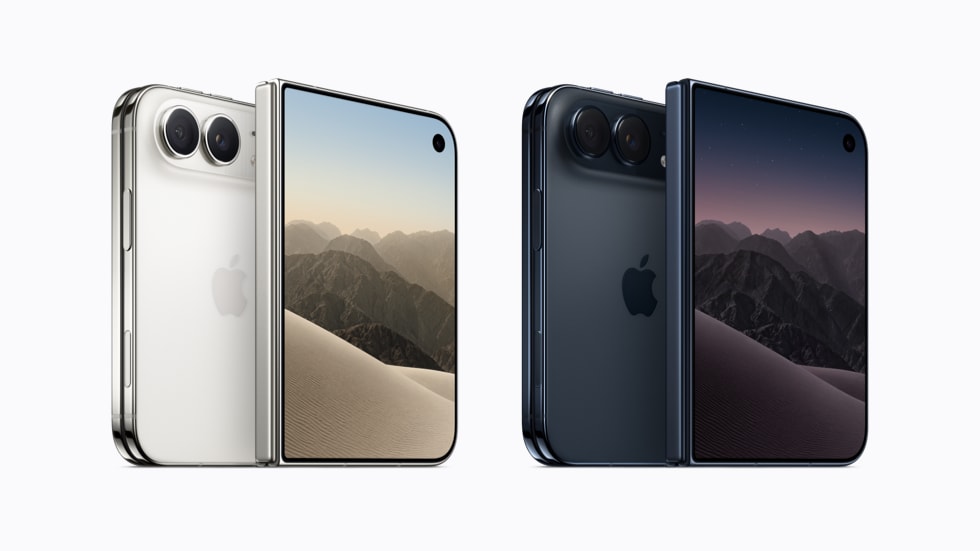
Two Displays, Two Jobs
The inner screen is the reason to buy this phone. At 7.6 inches, it is 50 percent larger than the iPhone 18 Pro Max display and sits close to iPad mini territory. Apple has applied a nano-texture finish, previously reserved for high-end Macs and iPads, which reduces glare and helps disguise the crease that has followed every foldable since the category began.
The 5.4-inch outer display is wider than the tall, narrow cover screens some rivals use. It offers more than 90 percent of the screen area of the standard iPhone 18 Pro, so replying to messages, checking maps or paying with Apple Pay does not feel like a compromise. Apple has also moved Lock Screen and Control Center shortcuts to the right-hand side to make one-handed use easier.
Both panels support ProMotion up to 120Hz and peak at 3,000 nits outdoors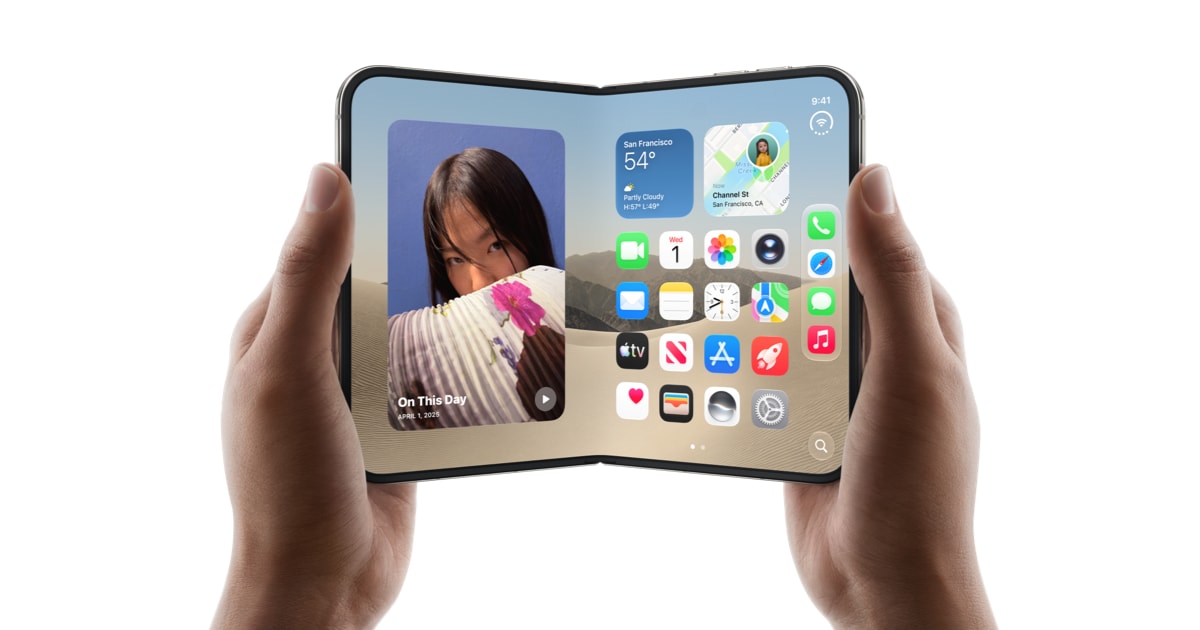
iOS 27.1 and True Multitasking
The iPhone Duo ships with iOS 27.1 rather than the initial iOS 27 release arriving on September 14. The extra time went into software built specifically for the fold.
The standout addition is Split View, which runs two apps side by side on the inner display. It is the first time multitasking of this kind has come to any iPhone. Apple’s redesigned Siri can occupy one half of the screen while you work in the other, and desktop-style layouts in apps like Slack make better use of the extra space. StandBy mode has also been upgraded for the half-folded position.
Apple also confirmed that Apple Pencil (USB-C) support will arrive later in 2026, turning the inner display into a pocketable sketchpad.
Cameras Built Around the Second Screen
On paper, the rear camera system is a step below the iPhone 18 Pro. The iPhone Duo uses what Apple calls a 48MP Dual Fusion camera: a 48MP Main camera at 26 mm with an f/1.6 aperture, and a 48MP Ultra Wide at 13 mm with f/2.2. There is no dedicated telephoto lens, so optical-quality zoom tops out at 2x, and the variable aperture introduced on the iPhone 18 Pro is absent. The Main camera still records 4K video at 120 frames per second in Dolby Vision.
Where the Duo pulls ahead is in what it can do with two displays. Four features are exclusive to it:
- Duo Preview shows a live camera preview on the outer display, so the people you are photographing can see how the shot looks before you take it.
- Smart Take uses on-device intelligence to detect when everyone in the frame is ready, then captures the photo automatically.
- Kid Cue plays Peanuts animations on the outer screen to draw a child’s attention toward the lens.
- Duo FaceTime extends a video call to the outer display so people sitting across from you can join in.
Because the folding body can stand on its own, hands-free video, FaceTime calls and time-lapse recording require no tripod. A Camera Control button with a Siri Camera mode rounds out the package. For selfies, there is a 12MP Center Stage camera on the outer screen and an under-display FaceTime camera on the inner panel.
Performance: A20 Pro Inside
The iPhone Duo runs the same A20 Pro chip as the iPhone 18 Pro line, built on a 2nm process. Apple says the 6-core CPU is up to 20 percent faster than the A19 Pro, and the 7-core GPU is up to 40 percent faster. The dual 16-core Neural Engine handles Apple Intelligence and the new camera features on-device.
A vapor-chamber cooling system helps the Duo sustain that power over longer sessions. Apple claims 35 percent better sustained performance than the iPhone 17 Pro, which matters for gaming and video editing on the larger screen.
Connectivity comes from Apple’s C2 modem. The iPhone Duo is eSIM-only in every market, with no physical SIM tray anywhere in the world.
Touch ID Returns
In a notable shift, the iPhone Duo does not have Face ID. Instead, Touch ID is built into the side button, which works whether the phone is open or closed. You can also unlock it with an Apple Watch. It is the first flagship iPhone to rely on a fingerprint sensor since the iPhone 8, a trade-off that frees space inside the thin folding halves.
Battery and Charging
Rather than a single cell, the iPhone Duo uses two high-energy batteries, one in each half of the phone, which iOS manages as one power source. Apple rates it at up to 24 hours of typical use and up to 44 hours of video playback on the outer display. With a 60W USB-C power adapter, it reaches 50 percent charge in about 20 minutes. MagSafe and Qi2 wireless charging are supported.
iPhone Duo Price and Storage Options
The iPhone Duo is one of the most expensive iPhones Apple has ever sold. US pricing is as follows:
| Storage | Price (US) |
|---|---|
| 256GB | $1,999 |
| 512GB | $2,199 |
| 1TB | $2,599 |
| 2TB | $3,199 |
Financing starts at $83.29 per month over 24 months. In the US, Apple Upgrade, a leasing program run through Klarna, offers 24-month terms from $57.99 per month.
Two dedicated accessories are available: the iPhone Duo Case at $79, in navy blue or sand, and the iPhone Duo Folio with Kickstand at $129, in navy blue or taupe. Both support MagSafe and Qi2 charging.
iPhone Duo Release Date
Unlike the iPhone 18 Pro models, which reach stores on September 18, the iPhone Duo runs on its own schedule:
- Pre-orders: Friday, October 16, at 5 a.m. Pacific Time
- Availability: Friday, October 23, in more than 70 countries and regions, including the US, UK, Canada, Australia, China, France, Germany, India and Japan
- Second wave: 28 additional countries and regions on Friday, October 30
How It Compares to the Galaxy Z Fold 8
Samsung’s Galaxy Z Fold 8 is the obvious rival, and it undercuts the iPhone Duo by $100 at every matching storage tier. It is also 53 grams lighter and comes with a promise of seven years of Android and security updates.
The iPhone Duo counters with a stronger IP68 rating against the Fold 8’s IP48, a titanium frame, tighter hardware and software integration, and exclusive camera features like Smart Take and Duo FaceTime. Apple has not published a specific update window, though iPhones typically receive six or more years of software support.
What Apple Has Not Said
A few details remain unconfirmed. Apple has not disclosed battery capacity in mAh, the amount of RAM, or a hinge durability rating. Crease measurements have not been published either. Expect those questions to be answered in independent reviews closer to launch.
The Verdict: Should You Buy the iPhone Duo?
Apple has done what it usually does with a new category: arrived late, studied the competition, and focused on refinement. The iPhone Duo’s large, glare-resistant inner display, IP68 durability and genuinely useful dual-screen camera features make it the most thoughtful foldable Apple could have launched as a first attempt.
It is not for everyone. Photography purists will get more from the iPhone 18 Pro’s telephoto lens and variable aperture, and $1,999 is a steep entry point for a first-generation device. But if you have wanted a phone that becomes a tablet in a single motion, and you are already invested in Apple’s ecosystem, the iPhone Duo is the most compelling reason to fold yet.
Mark your calendar for October 16. Early stock of Apple’s first-generation products has historically sold out fast.