The foldable iPhone Duo stole the headlines at Apple's "Surprise and Shine" keynote on September 9, 2026, but the phones most people will actually buy this fall are the iPhone 18 Pro and iPhone 18 Pro Max. They arrive in stores five weeks before the Duo, cost roughly $700 to $800 less, and bring the most advanced camera Apple has ever put in a phone.
From the outside, little has changed. Inside, Apple has rebuilt the camera, the chip, the cooling system and the battery. Here is everything you need to know before pre-orders open.
iPhone 18 Pro vs. iPhone 18 Pro Max at a Glance
| Specification | iPhone 18 Pro | iPhone 18 Pro Max |
|---|---|---|
| Display | 6.3-inch Super Retina XDR | 6.9-inch Super Retina XDR |
| Chip | A20 Pro (2nm) | A20 Pro (2nm) |
| Main camera | 48MP Fusion with variable aperture | 48MP Fusion with variable aperture |
| Other rear cameras | 48MP Ultra Wide, 48MP Telephoto (up to 8x optical-quality zoom) | Same |
| Video playback (eSIM-only models) | Up to 36 hours | Up to 45 hours |
| Typical use | Up to 24 hours | Up to 30 hours |
| Fast charging | 50% in about 15 minutes (wired) | 5 minutes of charging for about 7 hours of video |
| Storage | 256GB, 512GB, 1TB, 2TB | 256GB, 512GB, 1TB, 2TB |
| Colors | Black, Silver, Glacier, Burgundy | Black, Silver, Glacier, Burgundy |
| Starting price (US) | $1,199 | $1,299 |
Design: Familiar Shape, New Burgundy Finish
Apple has kept the overall design introduced with the iPhone 17 Pro, and the screen sizes stay at 6.3 and 6.9 inches. The enclosure uses 85 percent recycled aluminum, and both phones are made with 40 percent recycled content overall.
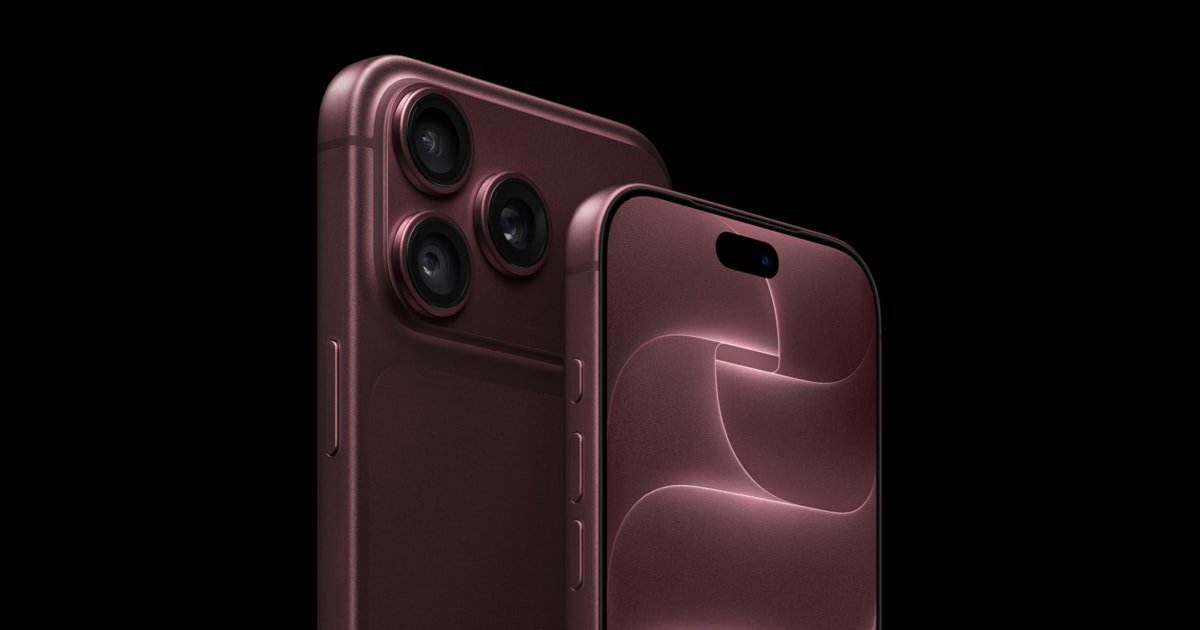
The visible changes come in color and on the front of the display. Apple is offering four finishes: black, silver, glacier (a pale blue) and an all-new burgundy. Burgundy is the launch color Apple is featuring most prominently in its marketing, much as it did with past signature colors.
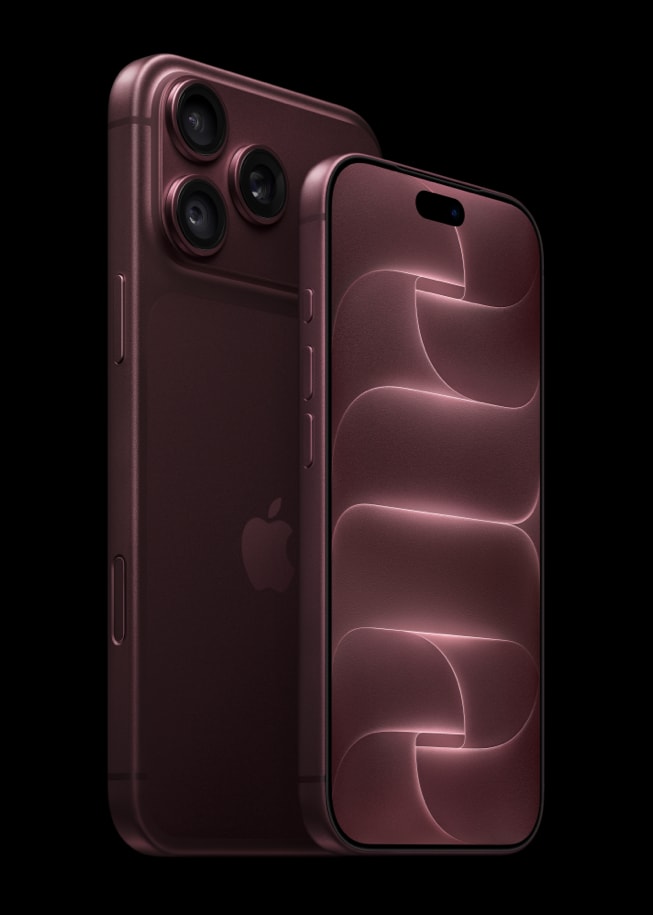
On the front, the Dynamic Island is smaller. Apple redesigned it using new display technology, which frees up screen space while still housing Face ID. It can now show three Live Activities at once, such as a delivery tracker, a timer and a sports score, instead of two.
The Headline Feature: Variable Aperture Comes to iPhone
For the first time on any iPhone, the main camera can physically change its aperture. The new 48MP Fusion Main camera uses six laser-cut blades, driven by a new rotor mechanism, to open and close the lens opening.
In practical terms, this changes how the camera handles light and focus:
- Low light: the camera can open up to f/1.48 to gather more light for night shots and dim interiors.
- Portraits: f/1.8 gives a natural balance of brightness and background blur.
- Group photos: narrowing to f/4 keeps more people in focus, including those standing in the back row.
Most users will never touch it. The camera adjusts the aperture automatically based on the scene. Photographers who want control can select any of the four aperture settings manually, and developers get an API to use the full range in third-party camera apps.
Alongside variable aperture, Apple has added Pro controls to the Camera app. It is a customizable panel for adjusting aperture, shutter speed and white balance, plus a live histogram for checking exposure. Slower shutter speeds, for example, make it possible to blur moving crowds while keeping a subject sharp.
The rest of the system is equally capable. There is a 48MP Fusion Ultra Wide camera and a 48MP Fusion Telephoto camera with up to 8x optical-quality zoom. A new sensor and computational imaging pipeline promise sharper detail. Photographic Styles gain texture and grain controls, Cinematic mode effects can now be applied after recording at up to 60 fps, Time-lapse records in 4K Dolby Vision HDR, and Audio Mix can now isolate music.
Apple Reference Image: Proof a Photo Is Real
In a year when AI-generated images are everywhere, Apple is introducing a tool to verify authenticity. Apple Reference Image relies on the new main camera sensor, which can cryptographically sign the data it captures.
When you shoot in the new Reference mode, the phone records this signed sensor data. Apple's Private Cloud Compute then develops it into a reference image that cannot be altered. In the Photos app, it sits alongside your edited photo like a digital negative, so anyone can compare the two and see what changed. Third-party apps can display reference images through new APIs in iOS, iPadOS and macOS 27.
The feature is opt-in. It will not be available in China at launch because of regulatory requirements, and capture will not be available on iPhone 18 Pro models in the EU at launch. Apple also says support for the SynthID standard, which helps flag images made or edited with AI, will arrive in a later software update.
A20 Pro: Apple's First 2nm Phone Chip
Both models run the A20 Pro, built on a 2-nanometer process. Apple lists these gains over last year's A19 Pro:
- CPU: a new 6-core design with integrated Neural Accelerators.
- GPU: a 7-core design that is up to 40 percent faster.
- Neural Engine: a dual 16-core design with 32 cores in total, doubling on-device AI processing power.
- Memory: 50 percent more memory bandwidth.
The bigger story may be heat management. Apple borrowed a chip packaging approach from its M-series Mac processors, placing the chip and memory side by side. That lets the A20 Pro sit directly against a redesigned vapor chamber with three times the surface area of the iPhone 17 Pro's. Apple says the result is up to 40 percent better sustained performance, the highest of any iPhone. That matters most during long gaming sessions, 4K video exports and heavy AI tasks, where phones typically slow down as they heat up.
Connectivity is also new. Apple's N1 chip handles Wi-Fi 7, Bluetooth 6 and Thread. Apple's second-generation C2 modem delivers faster uploads than the C1X while using 15 percent less energy, and adds mmWave 5G support in the US.
Battery Life: The Biggest Jump in iPhone History
Battery life is where the Pro Max makes its strongest case. Apple says the iPhone 18 Pro Max delivers the largest year-over-year battery increase of any iPhone, rated at up to 30 hours of typical use and up to 45 hours of video playback.
The smaller iPhone 18 Pro is rated at up to 24 hours of typical use, matching last year's iPhone 17 Pro Max, and up to 36 hours of video playback.
Charging is faster, too. The iPhone 18 Pro reaches 50 percent in about 15 minutes with a compatible 60W-capable adapter, or in 30 minutes on MagSafe or Qi2. On the Pro Max, just five minutes plugged in provides about seven hours of video playback.
There is one caveat. The top battery figures apply to eSIM-only models, which use the space once taken by the SIM tray for a larger battery, adding about two more hours of video playback. These models are sold in the US, Canada, Japan, Mexico, the UAE, Saudi Arabia, Qatar, Kuwait, Oman, Bahrain, Guam and the US Virgin Islands. Buyers in other countries will receive models with a physical SIM tray and slightly lower ratings.
iOS 27 and Siri AI
Both phones ship with iOS 27, which is also rolling out as a free update on Monday, September 14. The centerpiece is Siri AI, a rebuilt Siri powered by Apple Intelligence. It can find information across your messages, emails and photos, act on what is on your screen, and answer general questions. A new Siri mode in the Camera app lets it identify and act on whatever the camera sees.
Siri AI launches as a beta in English only, with French, Japanese, Korean, Portuguese and Spanish due in October. It will not be available in the EU at launch. Other iOS 27 additions include photo tools such as Spatial Reframing and Extend, more customization for the Liquid Glass design, and iPhone Handoff, which lets you switch between two iPhones on the same number with supported carriers.
iPhone 18 Pro Price and Storage
Both models come in 256GB, 512GB, 1TB and 2TB configurations. US starting prices:
| Model | Starting price (256GB) | Monthly (24 months) |
|---|---|---|
| iPhone 18 Pro | $1,199 | $49.95 |
| iPhone 18 Pro Max | $1,299 | $54.12 |
That is $100 more than the iPhone 17 Pro and 17 Pro Max, which launched at $1,099 and $1,199. Apple is offering $175 to $885 in trade-in credit for an iPhone 13 or later, while carrier deals at Apple go up to $1,200 for an iPhone 14 or later. In the US, the Apple Upgrade leasing program through Klarna starts at $34.99 per month over 24 months.
New accessories include a redesigned Clear Case ($49), Silicone Case ($49), TechWoven Case ($59), FineWoven Wallet ($59), Crossbody Strap ($59) and an all-new magnetic Wrist Strap ($29).
iPhone 18 Pro Release Date
- Pre-orders: Saturday, September 12, at 5 a.m. Pacific Time
- In stores: Friday, September 18, in more than 65 countries and regions, including the US, UK, Canada, Australia, China, India, Japan, Germany and France
- Second wave: 20 more countries and regions on Friday, September 25
Where the Rest of the Lineup Stands
This fall's iPhone lineup is unusually small and unusually expensive. There is no standard iPhone 18 this September. Apple is expected to launch the iPhone 18, iPhone 18e and iPhone Air 2 in spring 2027 instead.
That leaves three new flagship phones for 2026:
- iPhone 18 Pro from $1,199, in stores September 18.
- iPhone 18 Pro Max from $1,299, in stores September 18.
- iPhone Duo, Apple's first foldable, from $1,999, in stores October 23.
If you are torn between the Pro Max and the Duo, the choice comes down to camera versus screen. The Duo offers a 7.6-inch folding display but has no dedicated telephoto lens, no variable aperture and no Apple Reference Image. The Pro models remain Apple's best phones for photography.
The Verdict: Should You Upgrade?
The iPhone 18 Pro is not a redesign, and the $100 price increase will sting. But the upgrades land in the areas people care about most: a genuinely new camera, a meaningful jump in sustained performance, and battery life that should comfortably last well past a full day.
If you own an iPhone 15 Pro or older, this is a substantial step up, particularly the Pro Max for its battery alone. iPhone 17 Pro owners can reasonably wait, unless variable aperture or Reference Image matters to their work.
Pre-orders open Saturday morning, and the most popular configurations often see shipping dates slip quickly after launch.